The museum
A major centre of artistic creation in Montmartre at the turn of the 20th century, and just a stone’s throw from the Bateau-Lavoir, the studios at 12–14 Rue Cortot were occupied by numerous artists…
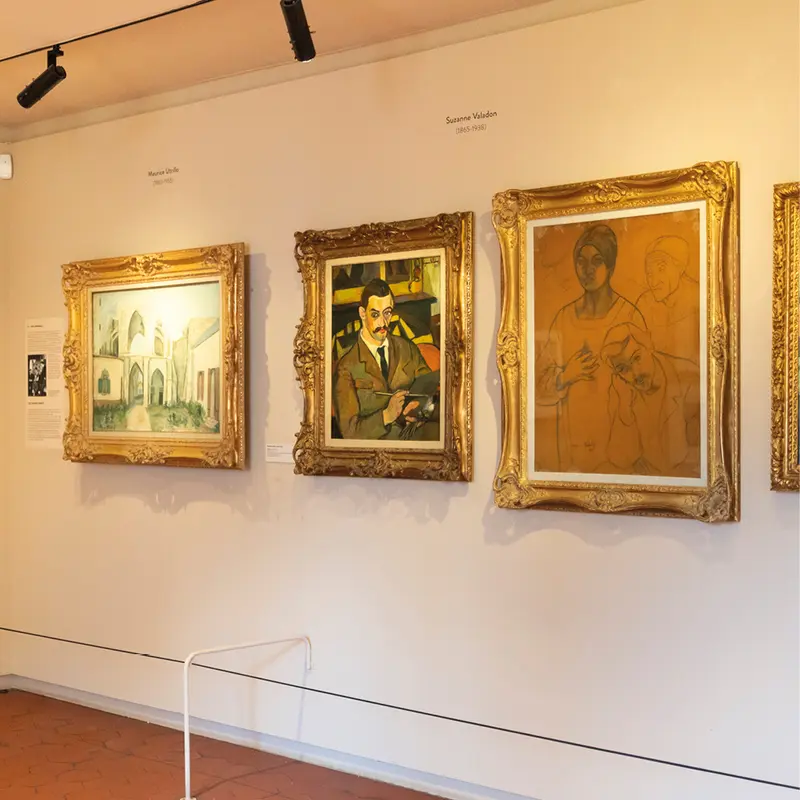
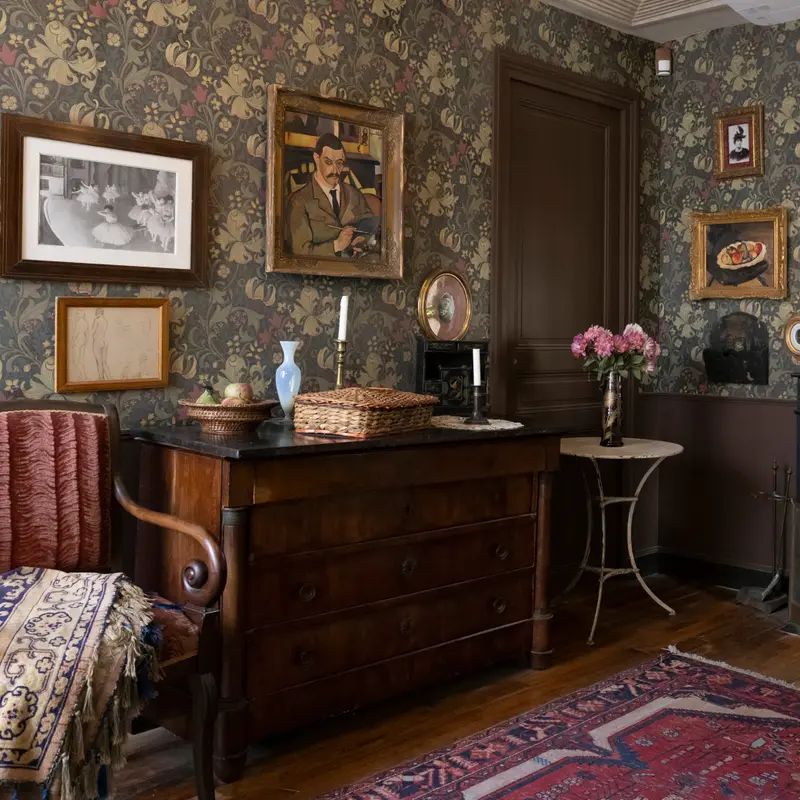
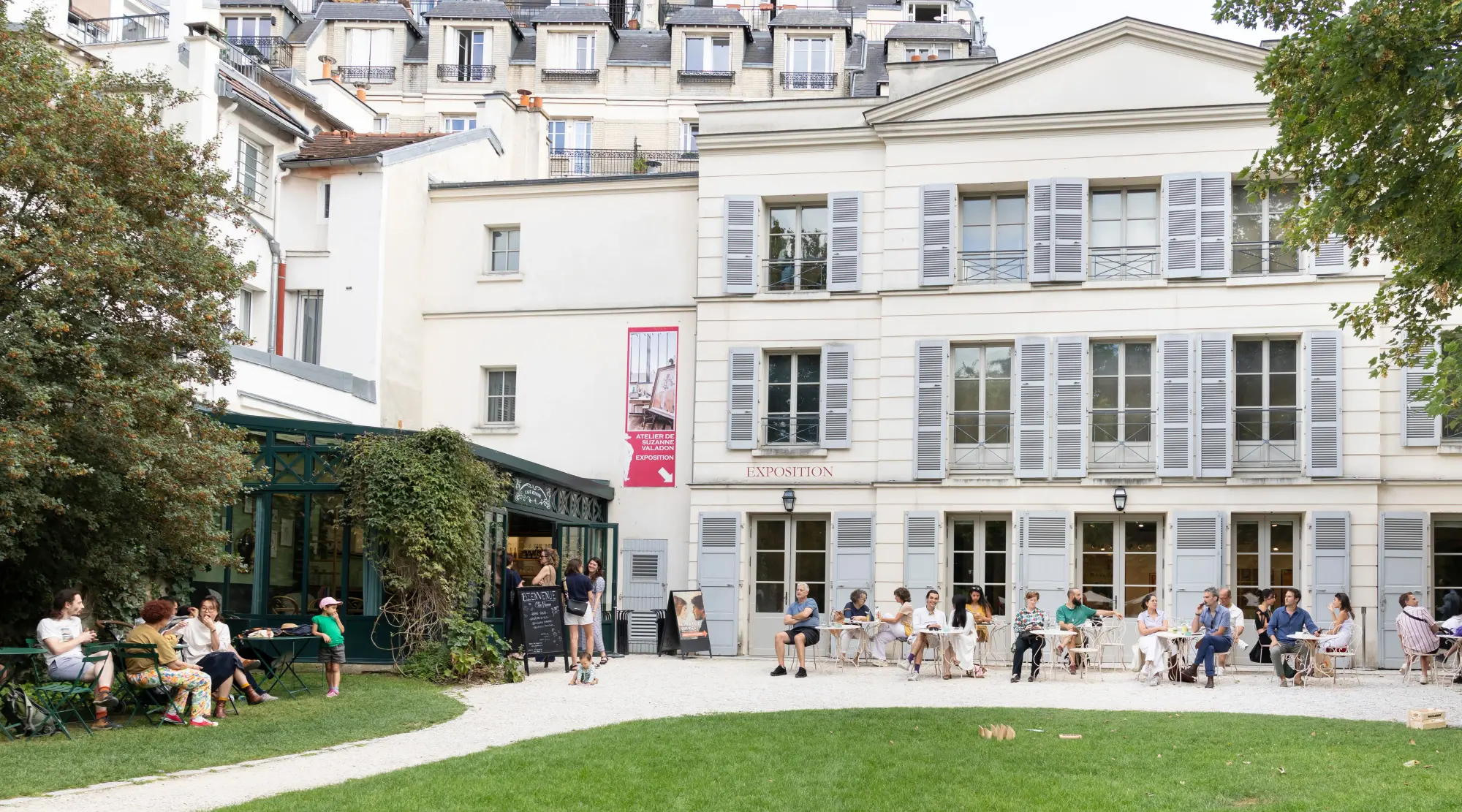
The placePierre-Auguste Renoir, Émile-Othon Friesz, Raoul Dufy, Émile Bernard, Charles Camoin, Démétrius Galanis, Suzanne Valadon, Maurice Utrillo, André Utter… It was on the very site of these former studios on Rue Cortot that the Musée de Montmartre was founded in 1960, with the mission of showcasing the history of Montmartre from its origins and highlighting the significance of the artistic flourishing on the Butte Montmartre. The site consists of a complex of 17th-century buildings: the Maison du Bel-Air, built in 1660, houses the museum’s permanent collections; the Hôtel Demarne, a private mansion dating from 1680 and featuring a new neoclassical façade added in the 19th century, hosts temporary exhibitions as well as a reconstruction of the studio-apartment of Suzanne Valadon and Maurice Utrillo, who lived there from 1912 to 1926. The Renoir Gardens, which surround the museum buildings, were named in memory of Auguste Renoir: the Impressionist painter lived there in 1876 and painted several masterpieces there, including Le Bal du Moulin de la Galette, La Balançoire et le Jardin de la rue Cortot. |
The storyThere are several Montmarts. Indeed, while strategically important in times of war, this “mountainous” site and its humble village proved to be a pleasant retreat for lovers of country homes, beginning as early as the late 17th century. On Rue Saint-Jean (renamed Rue Cortot in 1864), the Maison du Bel Air is one such home, reputed to be the oldest on the Butte (circa 1660). Today, one need only walk a short distance through the alleys to reach the Hôtel Demarne, which opens directly onto the street. These residences combine the charm of a commanding location and a view stretching beyond the Saint-Denis plain with the delights of a large, secluded garden, far “away” from Paris… The occupation of these plots of land dates back to the 17th century. At that time, they were small country homes. In 1680, the residence now the Hôtel Demarne (8–10 Rue Cortot) is said to have belonged to Claude de la Roze, known as de Rosimond (1640–1686), an actor in Molière’s troupe. Around that time, consisting of two main buildings (now joined) and outbuildings, it was distinguished above all by its garden and terraced parterre. From the late 17th century to the late 18th century, a succession of owners all members of the Parisian bourgeoisie—took turns living there. They took care to improve the comfort of the residence and add extensions to the complex, thereby contributing to the development of the townhouse architectural style, which was in vogue during the 18th century. Plus tard, l’hôtel Demarne sera divisé en appartements, tout en conservant sa façade néoclassique sur jardin. Inaugurée à l’automne 2014, sa rénovation est essentielle pour l’actuel musée et permettra d’en accueillir les expositions temporaires. Quant à la maison du Bel Air, il est séparé en deux propriétés distinctes en 1781, celle d’un « marchand fripier » sur rue et celle d’un « marchand épicier » sur jardin. Au XIXe siècle, son morcellement sera consommé avec la multiplication de très modestes logements locatifs. Après quelques nouvelles transformations, il abrite fréquemment les artistes. L’atelier Valadon-Utrillo témoigne de cette autre histoire des lieux, anticonformiste et si peu bourgeoise. Aujourd’hui, l’autre corps de bâtiment situé dans le jardin accueille les collections permanentes du musée ainsi que les bureaux de l’Association Le Vieux Montmartre. | 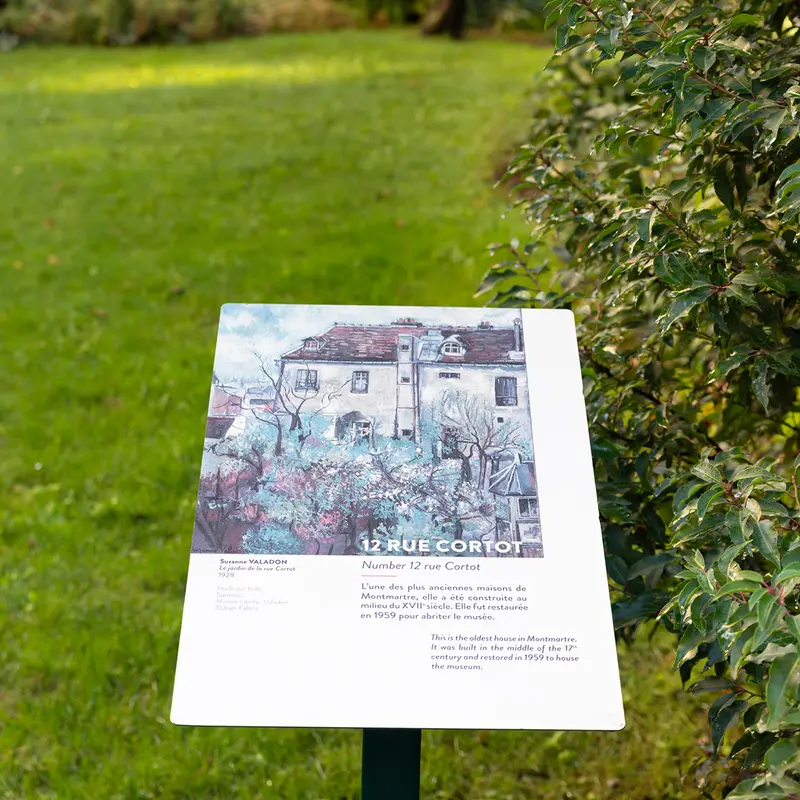 |
André Salmon celebrated the enduring presence of 12 rue Cortot: “The two old buildings have withstood everything. Even formidable attempts to convert the fixed stoves into portable ones failed to consign the house bearing the fateful number to the flames. Neither the dark fury nor the wildest revelry of Utrillo in his prime could do anything against the building—once bourgeois—whose windows look out onto the most beautiful of Paris’s last remaining gardens.” Destined for demolition, these properties—saved and reunited in 1930—embody the picturesque charm of the Montmartre hill. A sense of the unexpected meets history here. Fortunately, the museum’s establishment in 1960 preserved this fragile poetry between the two houses, within whose grounds a black cat often prowls.
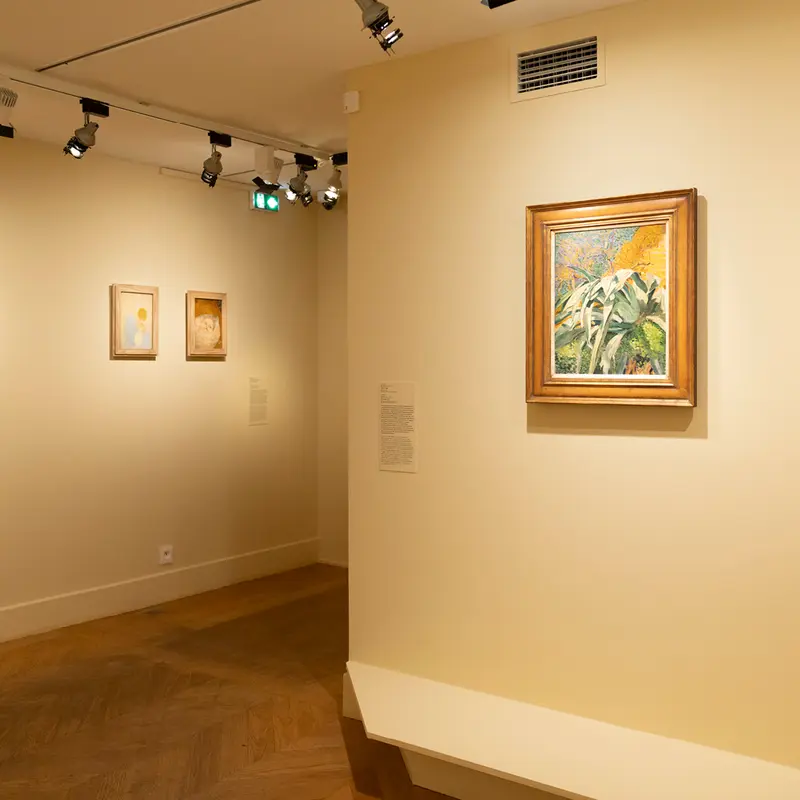 | The programThanks to the renovation program launched in 2013, the Hôtel Demarne now hosts an ambitious program of temporary exhibitions under conditions that comply with international museum standards and meet the requirements of preventive conservation. The museum’s curatorial program focuses on highlighting the significance of the artistic flourishing on the Butte Montmartre from the second half of the 19th century to the first half of the 20th century. For each of its temporary exhibitions, the Musée de Montmartre publishes a bilingual catalog featuring contributions and essays by leading scholars. Each exhibition also gives rise to a cultural outreach program for young audiences, extensive publicity, the establishment of institutional partnerships, and other initiatives such as lecture series or study days, all of which help maximize the exhibitions’ impact on the public. |